

Tuesday, June 05, 2012
Try to remember


Wednesday, May 30, 2012
Some you know, some I betcha don't

John F.
Kennedy, the 35th President of the United States, would have
been 95 years old on May 29th.
1. A wreath was laid
on his grave at the Arlington Cemetery in Arlington, VA on his birthday
earlier this week. (See the Arlington
Cemetery’s album of the ceremony on Facebook, here,
and a video
of the ceremony on MSNBC, here.)

2. Ted Sorenson,
Kennedy’s good friend and speech writer, is considered one of the best
Presidential speech writers ever.
When asked whether he or Kennedy was responsible for the phrase most identified with President Kennedy — from his inaugural speech in 1961:
“Ask not what your country can do for you; ask what you can do for your country,”
Sorenson invariably replied “ask not.”
(See Ted Sorenson’s obituary in the Boston Globe, here.)
When asked whether he or Kennedy was responsible for the phrase most identified with President Kennedy — from his inaugural speech in 1961:
“Ask not what your country can do for you; ask what you can do for your country,”
Sorenson invariably replied “ask not.”
(See Ted Sorenson’s obituary in the Boston Globe, here.)

3. JFK and the 16th
President of the United States, Abraham Lincoln, have more than a few things in
common:
- they entered office exactly 100 years apart (in 1960 and 1860, respectively);
- they were each elected to Congress exactly 100 years apart (1946 and 1846, respectively);
- President Lincoln had a secretary named Kennedy and President Kennedy had a secretary named Lincoln — Lincoln’s secretary is said to have warned him not to go to the theater and Kennedy’s secretary supposedly cautioned him against going to Dallas;
- both were succeeded by presidents named Johnson (Lyndon B. Johnson and Andrew Johnson);
- both were assassinated on a Friday by a shot to the head
- both perpetrators (Lee Harvey Oswald and John Wilkes Booth) were assassinated before reaching trial
For more coincidences, see the list on
Snopes, here.

4. Classic photo of John
F. Kennedy and John F. Kennedy, Jr. at the White House (for more JFK
images, visit Celebrating
JFK’s birthday with some rare photos of the man (30 photos) on The
Chive.

5. Would the Crimson
admit JFK today? JFK’s application to Harvard University was recently
released; he wrote a one paragraph essay in response to the question “Why do
you wish to come to Harvard?”
"The reasons that I have for wanting to go to Harvard are several. I feel that Harvard can give me a better background and a better liberal education than any other university. I have always wanted to go there, as I have felt that it is not just another college, but is a university with something definite to offer. Then to, I would like to go to the same college as my father. To be a ‘Harvard man’ is an enviable distinction, and one that I sincerely hope I shall attain."

6. He once said, “Liberty
without learning is always in peril; learning without liberty is always in vain.” The quote comes from the Vanderbilt
University 90th Anniversary Convocation Address he gave in May, 1963.

7. “A Thousand Days”
is a 20 minute archival documentary of JFK’s time in office, produced by
the U.S. Information Agency. You can find it here, and select
clips on The
Atlantic, here.

8. During World War II while serving in the United States
Navy, Kennedy’s boat, the PT-109, was rammed by a Japanese destroyer and cut in
half. Kennedy, who had once been on Harvard’s swim team, towed one crew member
too badly injured to swim three and half miles to the nearest land mass.
Eventually, Kennedy scratched a message on a coconut shell and
persuaded some natives to take it with them in their canoe to the nearest base. They were rescued soon after.
Read about the entire adventure at Smithsonian
Magazine, here.

“Nauru Isl commander / native knows posit / he can pilot / 11 alive need small boat / Kennedy.”
9. The most famous
association made with Kennedy’s birthday is of course Marilyn Monroe’s performance of “Happy Birthday” in
1962, which you can see on Youtube, here.

Wednesday, February 22, 2012
Except for February, Which Hath 28 (usually)
Just so you know — finding 29 facts, myths and superstitions about leap year was NOT easy. The things I do for you. Sigh.
Ready? Take a deep breath...
- According to Irish tradition, February 29th is the one day women have the right to propose to men. Which probably has nothing to do with why The Proposal was so much better than Leap Year, but I thought it was worth mentioning anyway.

- From the "read the fine print" files:
The hero in Gilbert and Sullivan’s “Pirates of Penzance,” Frederic, happily anticipates ending his pirate apprenticeship upon turning 21. But... "not so fast ye young pirate-in-training," says ye olde Pirate King. You see, according to the precise terms of the indenture contract, Frederic's apprenticeship terminates upon his 21st birthday — which, since he was born on February 29th, is another 60 some years away. The devil's in the details.

- In Welsh, February is called the little month — y mis bach — because it normally has only 28 days. In America, it's just called February, because "January, Uhmisboch, March, April..." is a mouthful.
- Using a calendar based on the moon's rotation around the earth — which governs the tides: better than nothing. Shifting to a calendar based on the earth's rotation around the sun — which governs the seasons: pretty smart. Coming up with the leap year thing to deal with those pesky extra quarter days so seasons and months stay in sync? Priceless.

- Where's Irving Berlin when you need him? If we stopped having leap years, in a couple of centuries, Christmas would fall about when Halloween falls now and Michael Buble's great- great- great- grandson would be crooning (or trying to croon) something like
I'm dreaming of a gold Christmas
Not snowy white like sung by Bing
Now it's pumpkins in flames and children who claim
Only losers go caroling.
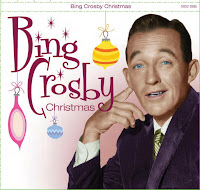
Oy. - “What is a frog’s favorite time?” “Leap Year.” ROTFL.
- Now you tell me? According to English law, February 29th is ignored as a day and has no legal status — hence crimes on that day traditionally were not prosecuted. Forget the Twinkie defense, how about this: "It's impossible for my client to have stolen the crown jewels on February 29th, your honor. There is no February 29th." Riiiiight.
- Hail Caesar. In 45 B.C., Julius Caesar decreed that the entire Roman empire abandon the lunar based calendar and go solar. The whole empire. No ifs, ands or buts. I know CEOs who can't even get all their employees to use the same email system.

- It was Caesar's ("fat and sleek-headed," I presume) astronomers who informed him that the solar cycle is actually 365 and 1/4 days long. No worries, said he — another decree, and the newly adopted calendar system included an extra day every four years. And that's how we got the Julian calendar avec leap years and all.
- This year, 56 countries are recognizing February 29th as “Rare Disease Day,” a movement that supports research into — shocker — rare illnesses. Personally, I'm not sure how much progress they'll make for their cause campaigning only every four years, but what do I know?
- Run, Forrest, run! In Scotland, it was once illegal for a man to turn down a proposal of marriage from a woman made on February 29th. Supposedly fines were levied if the man refused — "anti-alimony?" Or maybe, "ante-alimony."

- Julie turns into Greg. No surgery — just some math, ma'am.
Sometime in the 16th century, the church noticed Easter was falling earlier each year. Putting two and two together, they came up with 11 — turns out the solar year is 11 minutes shy of a full 365 1/4 days — over time, those missing 11 minutes began to mount up and make some noise. Like three days every 400 years kind of noise.
Pope Gregory XIII decreed (what, you thought only Roman emperors did that?) by papal bull — a perfectly ironic euonym if ever there was one — that, to make up for the missing time over time, a leap year would be skipped every century, except for every fourth century. And although not part of the papal bull, the Julian calendar was no more; long live the Gregorian calendar. ("Papal bull" — don't you just love that?) - The odds of a person both being born and dying on leap day are 1 in over 2 million. For the rest of us shmos, the odds of dying on our birthday is a measly 1 in about 133,000. Not that I would ever call Ingrid Bergman (August 29, 1915-August 29, 1982) a shmo.


- Don't ask, don't tell. The technical term for a leap year is “bisextile.” In Caesar's time, the extra day wasn’t added to the end of the month as it is now, but on the sixth day before the Calends of March ("calends" being Latin for the first day of the month) — so in leap years, two of these extra days would occur in February — hence “bi” (for two) and “sex” (for six). All I can think is that it would make scheduling your next hair appointment a real pain,
"How is Tuesday, February 24th for you, ma'am?"
"Hmmm, does he have anything available on Wednesday, the 24th?"
"No, sorry, the 24th is all booked."
"Didn't you just offer me an appointment on Tuesday, the 24th?"
"Yes, we still have some time on that 24th."
Who's on first? He sure is.
Oh, you want to know why the Romans added the day on the 24th, rather than the end of the month? So do I. - Remember "keep it simple, stupid?' Ha! To be a leap year, the year must a) be divisible by 4 and b) NOT be divisible by 100, unless c) it’s also divisible by 400. Or you could just Google it.

- What do Giacchino Rossini (composer—Barber of Seville), Dinah Shore (singer and Burt Reynolds' ex), Ja Rule (rapper), Al Rosen (baseball player), Tony Robbins (really rich motivational speaker and tanorexic), Jimmy Dorsey (band leader) and Aileen Wournos (serial killer) have in common? One guess. (Hint: it has to do with their birthdays).
- Oh, yassum she did! For her portrayal of Mammy in GWTW, Hattie McDaniel became the first black person to win an Academy Award, which she did for Best Supporting Actress on February 29, 1940.

- "Eight days a week... is not enough to show I care" — or so say the Beatles. How about 15 months a year? That Caesar was a busy guy; in addition to the whole "so long lunar, hello solar" thing, he also decreed that the year 46 B.C. be 15 months long to make up for the seasonal discrepancy that had accumulated to that point. Really bad news for those criminals sentenced to a year of punishment.
- From the "oh no, she di'int!" files:
Karin Henriksen of Norway gave birth to three children on three consecutive leap days — in 1960, 1964 and 1968. - People born on leap day are called "leaplings" or “leapers.” People born on other days are called "babies."

- Leap years are the only year when there are five instances of the same day in February — February 2012 is a month of Wednesdays. 2032 is the next time February will be a month of Sundays. In case you were wondering.
- It is considered unlucky in Scotland to be born on leap day. Which means there are 39 seriously pissed off Scots cursing the day they were born.
- From the "what doesn't kill you makes you stronger" files:
In 1928, Henry Craddock — the head bartender at the Savoy Hotel in London — introduced the Leap Year cocktail (4 parts gin, 1 part sweet vermouth, 1 part orange liqueur, with a dash of fresh lemon juice).
We suggest that after a night of those, you start off your next morning with Craddock's infamous Corpse Reviver #2 ("four taken in swift succession will un-revive the corpse again") — a refreshing, or deadly, mixture of equal parts fresh lemon juice, Cointreau, Lillet Blanc and gin, with a dash of absinthe.

- All leaplings are born under the sign Pisces, and, according to astrologers, have unusual personalities and talents. Which sounds a lot to me like the Chinese curse, "may you live an interesting life." I'm just saying.
- It is called a “leap year” because in England the extra day was not recognized under law, the day was ignored — or “leapt over.” And because it's easier to say than "intercalary year."
- According to legend, it was the nun, St. Bridget, who campaigned St. Patrick in the 5th century for women’s right to propose — something previously inconceivable. St. Patrick finally relented — and permitted women to propose to men one day every four years. Big of him.
- In 1712, Sweden had two leap days, February 29th and February 30th — to facilitate the country’s switch from the Julian to the Gregorian calendar. At least they didn't have two February 29ths. 'Cuz that would have been confusing.

- In America, once every four years just isn't enough. Thanks to Al Capp, we have an annual role reversal day: “Sadie Hawkins Day," so named for the comic strip character whose father bemoaned ever marrying her off. He instituted an annual footrace for the single gals to chase the unmarried Dogpatch men — and marry the one they caught. Think "The Bachelorette" meets "The Amazing Race."
- The beginning of this century, the year 2000, will be the last century to start with a leap year until 2400. (I told you, 29 facts is hard!)


Subscribe to:
Posts (Atom)
 RSS subscription options are... here!


